Death Tarot Card Meaning
Death is the card of endings, not of dying: one chapter closes for good, and the space it leaves behind is where the next one begins.
- Upright keywords
- ending
- transformation
- release
- closing a chapter
- clearing space
- Reversed keywords
- resistance to change
- stagnation
- holding on
- delayed ending
- fear of letting go
- Element
- Water
- Astrology
- Scorpio
What’s on the Card
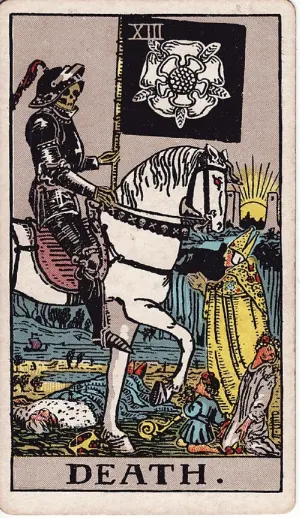
A skeleton in black armor rides a white horse, carrying a black banner with a white rose on it. A king lies on the ground with his crown fallen beside him. A bishop in gold robes stands with his hands together, facing the rider, while a young woman kneels and turns her head away and a small child looks up. Behind them a river flows past, a boat sails on it, and a sun rises between two towers. The horse keeps walking; everyone meets it differently.
Death Upright Meaning
Few cards cause more panic and deserve less of it. In a reading, Death almost never points to a physical death. It's the card of endings: the lease that runs out, the job you finally leave, the friendship that has quietly become a memory, the version of yourself that no longer fits. Waite's list starts bluntly with “end, mortality, destruction,” and the card does mean that something is truly over.
What makes Death different from the Tower is the pace. Nothing explodes here. The rider moves slowly and steadily, and the change it brings has usually been coming for a while. Look at the people in front of the horse: the king ignored it, the bishop bargains, the child simply looks. The card asks you to be more like the child. Accept that this part is finished, grieve it if you need to, and clear the space. The rising sun behind the towers is part of the picture for a reason: after the ending comes the morning.
Death Reversed Meaning
Reversed, Death is an ending you're holding back with both hands. You know the chapter is over, but you keep rereading the last page: checking an old profile, renewing something out of habit, staying in a role because leaving feels like admitting defeat. Waite described the reversal as “inertia, sleep, lethargy,” and that's often how it feels, like being stuck in a room you've already moved out of.
Sometimes the reversed card shows a change that's happening slowly and only on the inside, without much visible proof yet. Either way, the message is the same. The longer you resist a natural ending, the more energy it takes to keep the old thing alive. Name one thing you're holding on to out of fear rather than love, and loosen your grip on it a little this week.
Death in Love
Upright in love
If you're single, Death clears out an old pattern: the type you keep choosing, the ex you still measure everyone against, the story that love always ends the same way. Letting it go makes room for someone new. If you're in a relationship, it marks the end of a phase, not necessarily the end of the two of you. The honeymoon stage closes, a routine changes, and you meet each other again as you are now.
Reversed in love
Reversed, Death points to a relationship or a hope that's kept going on habit. You may be holding on to someone who has already left emotionally, or avoiding the talk that would change things for both of you. Ask yourself what you'd choose if you weren't afraid of the empty space, then take one honest step toward it.
Death as Feelings
Upright as feelings
As feelings, Death means something has shifted for them, and it isn't going back. They may be closing an old chapter with you, or they feel changed by knowing you. Either way, the way they saw things before is over.
Reversed as feelings
Reversed, they're stuck between what was and what's next. They may still be attached to an old version of the relationship and unsure how to let it change. Part of them is ready to move on; part of them isn't.
In a reading about someone
- Will they reach out?
- The rider on the white horse doesn't turn back. If a message comes, it's more likely to close a chapter than reopen it, and the ending you write is yours to choose.
- Why are they distant?
- Their life has moved into a new season, like the river flowing past in the background. The distance belongs to that change more than to anything about you.
- Do they regret it?
- Endings on this card are final, and looking back rarely reopens the door. Sadness about what's gone can slowly turn into acceptance.
- Where is this going?
- This connection is ending in its current form. Anything new would have to start from scratch, like the sunrise between the two towers.
Death: Yes or No?
Upright: No
Upright, Death is a no to the situation as it stands. That door is closing, and pushing on it won't reopen it. It can be a yes to the next door, though: ask what you're making room for instead.
Reversed: No
Reversed, it's still a no. Nothing new can start while you're holding the old thing in place. Let go first, then ask again.
Death in Career and Work
Upright at work
At work, Death can be the end of a role, a team or a way of working. It's a natural turning point rather than a failure. Wrap things up properly and pay attention to what you want to carry forward.
Reversed at work
Reversed at work, you may be staying in a role you've outgrown because change feels risky. Write down what keeps you there, and see which reasons still hold.
Death as a Person
As a person, Death is someone who changes your life just by passing through it. Calm, intense and honest about endings, they're good in a crisis and don't pretend things are fine when they aren't.
Death as Advice
Let the finished thing be finished. Close it properly, then clear the space instead of filling it right away.
As your card of the day
A good day to end something small: cancel the subscription, clear the drawer, delete the draft you'll never send.
For the months ahead
The months ahead start with an ending. Something you've outgrown comes to a close, sometimes by your choice and sometimes not. The early weeks can feel empty or strange, like an apartment after the movers leave. By the middle of the period, the quiet becomes useful: you notice what you actually want to keep. Toward the end, a new routine, role or relationship starts to take shape in the space that opened up.
Strong Pairs with Death
Death + The Tower
Two endings at once. The Tower is the sudden break, and Death is the slower letting go that comes after it. Something is over; mourn it, then make room.
Death + Ten of Swords
The lowest point and the end of it. A painful chapter is finished for good, and you don't have to keep reliving it.
Death + Justice
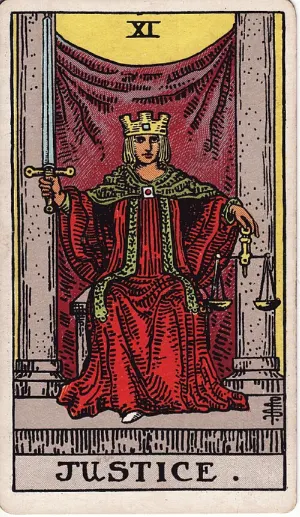
An ending that follows from earlier choices. A decision becomes final, and what comes next depends on dealing with it fairly and honestly.
Death + Temperance
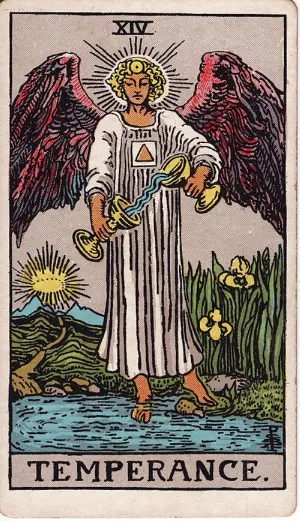
Temperance follows Death in the deck. After the ending comes a slow rebalancing: new habits, gentler days and a life that blends the old with the new.
FAQ
Does the Death card mean someone will die?
No. In tarot, Death is a symbol of endings and change, not a prediction of anyone's physical death. It usually points to a chapter closing: a job, a relationship, a habit or a way of seeing yourself.
What does the Death card mean in love?
It marks the end of a phase. For a couple, that can be the close of an old pattern so the relationship can grow up. For someone single, it often means letting go of a past love to make room.
Draw this card
Open the card in the yes or no tarot and ask your own question, or draw a fresh card from the full deck.